
Optimizing Egg Quality Through Autophagy, Mitophagy, and Preconception Cellular Renewal
In today’s world, more women are choosing to start families later—first births for women over 35 have risen sharply, driven by career priorities, education, and life goals. Yet biology hasn’t shifted: fertility and egg quality begin a noticeable decline around age 35, accelerating after 40. Advanced maternal age (AMA) brings higher risks of chromosomal abnormalities, reduced fertilization rates, lower implantation success, and increased miscarriage—challenges rooted not just in egg quantity, but in the quality of those eggs at the cellular level.
The good news? The conversation has evolved from reactive prenatal vitamins to proactive preconception optimization. Research-driven couples—especially educated, high-achieving women 35–45 and their partners—are now targeting the root causes: mitochondrial dysfunction, oxidative stress, and declining autophagy (the body’s cellular cleanup system). At Progeny Brands, we focus on fertility autophagy as the cornerstone of cellular health for conception. Our liposomal spermidine delivers true bioavailability to support mitophagy—the targeted recycling of damaged mitochondria inside oocytes—helping restore egg quality naturally.
This pillar page serves as your authoritative guide to conception strategies for advanced maternal age. Backed by peer-reviewed studies from NIH, PubMed, and leading journals like Nature Aging, we’ll explore the science of AMA-related egg decline, how autophagy and spermidine can counteract it, and a practical, evidence-based protocol that complements IVF or natural conception. Whether you’re in a TTC community, preparing for fertility treatments, or simply optimizing proactively, these strategies empower you to take control at the cellular level.
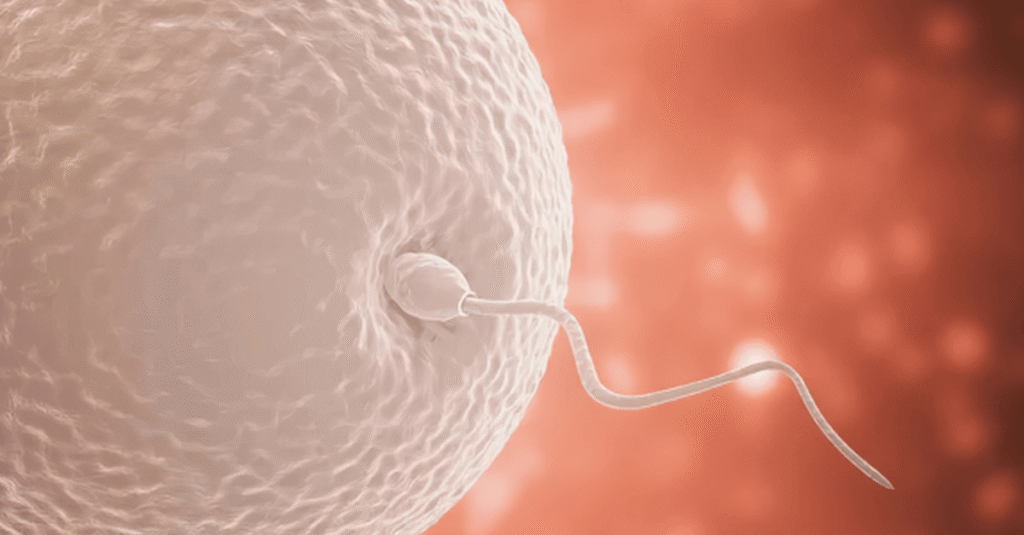
The Science of Advanced Maternal Age: Why Egg Quality Declines After 35
Female fertility is finite. Women are born with all their oocytes, and by age 35, both quantity (ovarian reserve) and quality drop significantly. Key markers include:
- Rising aneuploidy rates: From ~20% under 35 to 60–80% by age 42, leading to higher miscarriage and lower live birth rates.
- Mitochondrial dysfunction: Oocytes rely on hundreds of thousands of mitochondria for energy. Age-related damage reduces ATP production, impairs spindle formation during meiosis, and increases reactive oxygen species (ROS).
- Oxidative stress: The “hidden saboteur” of conception—excess ROS damages mitochondrial DNA, triggers apoptosis in granulosa cells, and accelerates follicular atresia (egg loss).
These changes aren’t inevitable in the same way they once seemed. Emerging research shows that autophagy and mitophagy—the cellular renewal processes—naturally decline with age but can be restored. This is where preconception optimization shines, shifting the focus from “just trying” to scientifically supporting your reproductive cells during the critical 90–120-day window of follicle development.
Internal link: Learn more about the cellular mechanisms in our pillar page on autophagy and fertility.

Autophagy and Mitophagy: The Cellular Key to Reversing Egg Quality Decline in Advanced Maternal Age
Autophagy (Nobel Prize-winning cellular “recycling”) clears damaged proteins, organelles, and debris. In oocytes, it becomes mitophagy—specifically targeting dysfunctional mitochondria. When mitophagy slows after 35, damaged mitochondria accumulate, oxidative stress skyrockets, and egg quality plummets.
Studies confirm:
- Age-related drop in autophagic flux (measured by LC3-II and Beclin-1 markers) correlates with poorer oocyte maturation and embryo development.
- Boosting mitophagy reduces follicular atresia, lowers ROS, and improves mitochondrial function in ovarian tissue.
External link: For a full review, see “Autophagy and Female Fertility: Mechanisms, Clinical Implications, and Therapeutic Strategies” (PMC11352459).
This is why Progeny Brands positions fertility autophagy as the future of preconception care—especially for women over 35 seeking evidence-based options beyond traditional prenatals.
Spermidine: The Evidence-Based Autophagy Inducer That Rejuvenates Aged Oocytes
Spermidine, a natural polyamine, is one of the most potent autophagy inducers identified. Levels decline with age in parallel with fertility—mirroring the drop in egg quality.
Landmark 2023 research in Nature Aging (Zhang et al.) showed:
- Aged mice (equivalent to women ~44) had significantly lower ovarian spermidine levels.
- Spermidine supplementation restored oocyte quality by enhancing mitophagy, improving mitochondrial function, follicle development, maturation rates, and overall fertility.
- The mechanism was conserved in porcine (pig) oocytes under oxidative stress—highly relevant to human biology.
Additional studies:
- Spermidine protects against ovarian aging, reduces follicular atresia, and lowers oxidative stress in ovarian tissue (NIH/PubMed data).
- It improves post-ovulatory oocyte quality and shows promise for IVF outcomes.
Internal link: Dive deeper in our pillar page The Science of Spermidine and Fertility.
Why liposomal spermidine? Standard oral forms have poor bioavailability. Progeny Brands’ liposomal delivery ensures the compound reaches reproductive cells intact—non-negotiable for true fertility autophagy support. See our comparison: Liposomal Spermidine vs. Regular Spermidine.
Comprehensive Conception Strategies for Women Over 35
Preconception optimization isn’t one-size-fits-all. Here’s a multi-pronged, science-backed approach tailored for advanced maternal age:
- Dietary Foundations for Autophagy and Egg Health Adopt a Mediterranean-style, polyamine-rich diet (wheat germ, soybeans, mushrooms, aged cheese, broccoli). Incorporate a fasting-mimicking diet (FMD) periodically—human and animal studies show it boosts autophagy markers and protects aged oocytes from oxidative damage.Internal link: Explore details in Autophagy and Dieting for Preconception and Fasting-Mimicking Diet for Autophagy.
- Lifestyle Interventions
- Moderate exercise (150 min/week aerobic + strength training) improves ovarian blood flow and reduces inflammation.
- 7–9 hours of quality sleep supports melatonin, a natural ROS scavenger.
- Stress management (meditation, acupuncture) lowers cortisol, which can impair autophagy.
- Minimize endocrine disruptors and environmental toxins.
- Targeted Supplementation with Cellular Focus While CoQ10, omega-3s, and myo-inositol help, spermidine stands out for directly inducing mitophagy. Combine with our liposomal formula for maximum impact. 70% of IVF patients already use supplements—yet 45% don’t disclose them. Our clean, green-label products are IVF-clinic compatible.Internal link: Full stack guidance in How to Improve Egg Quality After 35.
- Male Partner Optimization (Because 55% of Infertility Is Male-Factor) Include him in the protocol—spermidine supports sperm motility, morphology, and DNA integrity via the same autophagy pathways. Align with the 74-day spermatogenesis cycle. Internal link: Spermidine and Male Factor Infertility.
The Autophagy-Optimized Conception Protocol for Advanced Maternal Age (90–120+ Days)
Designed for the 90–120-day follicle development window (longer than the classic 74-day sperm cycle for women over 35):
- Phase 1 (Weeks 1–4): Baseline testing (AMH, antral follicle count, semen analysis, oxidative stress markers). Start daily liposomal spermidine + core diet/lifestyle changes.
- Phase 2 (Months 1–2): Add FMD cycles if tolerated; consistent supplementation. Focus on oxidative stress reduction.
- Phase 3 (Months 3–4): Re-test markers; intensify for IVF prep if pursuing assisted reproduction. 90-day bundles align perfectly with these cycles.
- Phase 4 (Ongoing): Maintenance dosing + monitoring. Cost reality check: Supplements are ~1% of one IVF cycle but act as powerful “insurance.”
This protocol complements IVF beautifully and supports natural conception for motivated TTC couples.
Shop our 90-Day Fertility Autophagy Bundles → Designed for couples serious about preconception optimization.

Special Considerations: IVF Support, Safety, and Doctor Communication
For IVF seekers: Spermidine’s mitophagy boost can improve oocyte yield and embryo quality in poor responders over 35. Always disclose supplements—your REI will appreciate the proactive approach. Our formulas are vegan, non-GMO, and formulated for discretion and convenience.
Safety profile: Spermidine is well-tolerated; start with evidence-based dosing and consult your physician, especially if undergoing treatment.
Frequently Asked Questions (FAQ)
Can I improve egg quality after 35 naturally? Yes—through targeted autophagy support, diet, and lifestyle. Studies show measurable improvements in oocyte parameters.
How does spermidine compare to other fertility supplements? It uniquely targets mitophagy; most others address symptoms rather than the cellular root.
Is this protocol safe alongside IVF medications? Yes—designed to complement, not interfere.
Internal link: More FAQs in our Spermidine for Conception page.
Conclusion: Take Control of Conception at the Cellular Level
Advanced maternal age doesn’t have to limit your options. By embracing preconception optimization—focusing on autophagy, mitophagy, oxidative stress reduction, and liposomal spermidine—you can support healthier eggs, better embryo quality, and higher chances of success, whether naturally or with IVF.
At Progeny Brands, we’re the authoritative source on fertility autophagy and cellular health for conception. Our liposomal spermidine is formulated for true bioavailability, clean labeling, and real results for research-driven women and couples.
Ready to optimize? Explore our preconception bundles today and join the shift from prenatal vitamins to cellular-level fertility optimization.
Key Takeaways:
- Egg quality after 35 is improvable through mitophagy and autophagy.
- Spermidine is backed by gold-standard studies for AMA.
- The 90–120-day protocol aligns with biology and delivers results.
Pingback: How to Boost Your Fertility as a Woman: Science-Backed Strategies for 2026 - progenybrands.com